

Cap styles, explained.
Cap Styles Explained
A-frame, snapback, trucker or camp cap? Learn what the names tell you about shape, construction and fit, with Blackskies examples that make the differences easy to see.

One cap. Several useful descriptions.
A cap can be an A-frame, a trucker and a snapback at the same time. Each term tells you about a different part of it. That overlap explains why two shops may give a very similar cap different category names.
The crown is the part covering your head; its fabric sections are called panels. The visor, also called the bill or brim, projects from the front. Start with these parts and cap names become much easier to decode.
The names at a glance
| Name | What it describes | What to look for |
|---|---|---|
| Baseball cap | The broad cap family | A crown with a projecting front visor |
| A-frame | Front shape | A pronounced, pinched front |
| Trucker | Back construction | Mesh side and rear panels |
| 5-panel / 6-panel | Crown construction | The number of main panels |
| Camp cap | A particular silhouette | Usually a low-profile, five-panel camper shape |
| Snapback / strapback | Adjustment | Plastic snaps or an adjustable strap |
| Fitted | Sizing | A closed back in a specified size |
| Bucket hat | Overall shape | A brim running around the crown |
Baseball caps and dad caps: the familiar starting point
Baseball cap is a broad family of headwear, rather than one precise cut. A familiar version has six panels meeting near the top, a rounded crown and a curved visor. The family also includes other panel counts, flatter visors and different closures.
A dad cap usually means a softer, unstructured baseball cap with a low-profile crown and a pre-curved visor. It follows the head more closely and looks less rigid. A structured baseball cap holds a clearer outline. The difference is in the construction, not the age or gender of the wearer.
A-frame: recognise the front, not just the height
An A-frame cap has a distinctive pinched front that rises towards the centre. Seen from the front, it creates the pronounced, roughly triangular outline behind the name. A broad front panel gives patches or embroidery a clear space without the full-length centre join of a typical six-panel baseball crown.
A-frame designs often use five panels, but the panel count alone does not create the shape. The cut and support of the front matter too. Crown height and visor shape vary between models: A-frame does not automatically mean the tallest possible crown, a flat brim or a mesh back.
The shape in practice
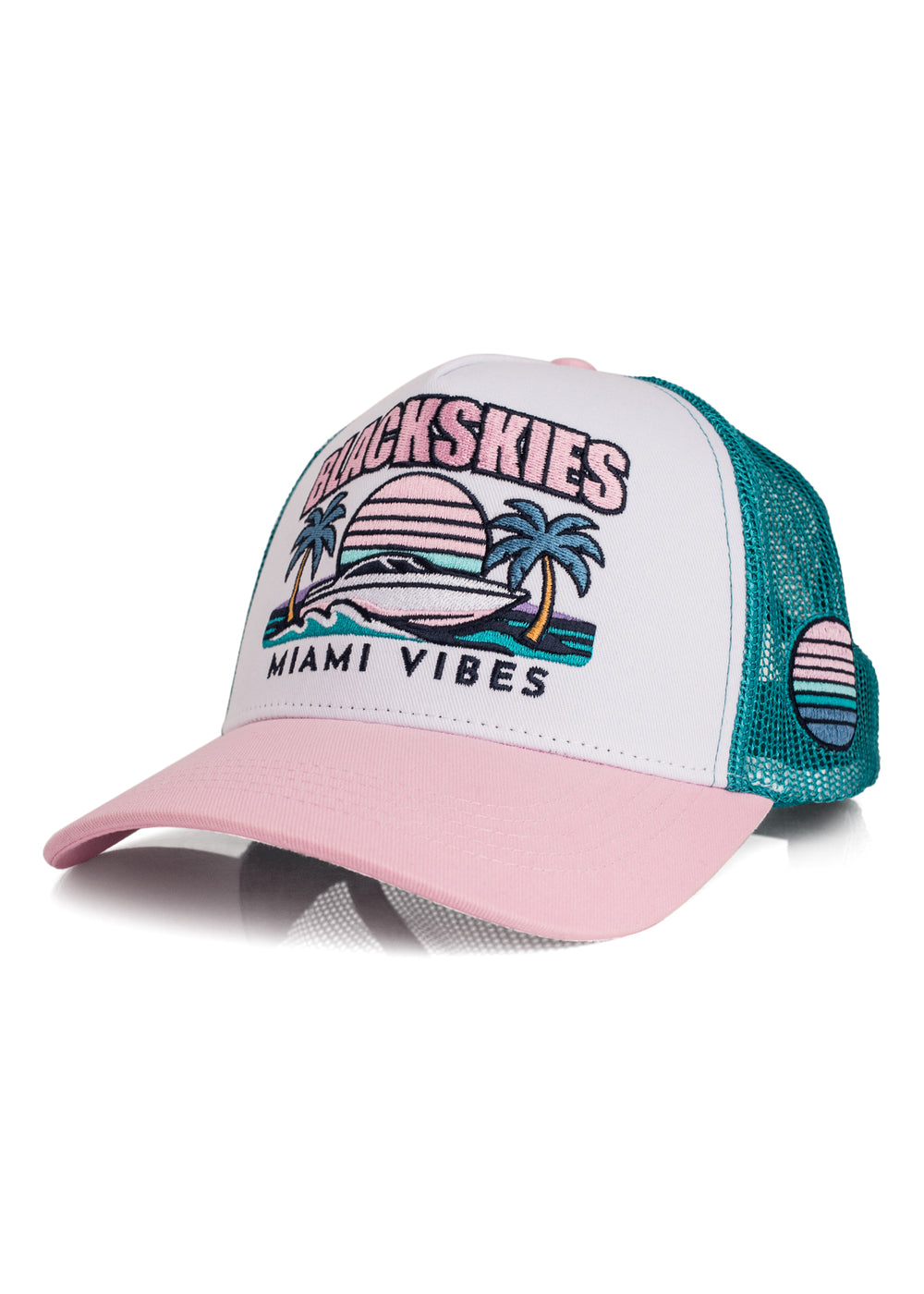
A-frame example: Miami Vibe
A-frame · mesh back · snap closure
The Miami Vibe Trucker Cap shows the pronounced A-frame front with a curved visor. Its mesh back makes it a trucker; its adjustable snap closure makes it a snapback too. Look at the front outline first, then the side and back views to see how those descriptions fit together.
See the cap →Trucker: the mesh makes the difference
The defining feature of a trucker cap is its mesh side and rear panels, paired with a solid front. That contrast gives it an open-backed look and allows air to pass through the mesh. Foam fronts are a familiar version, but truckers also use other front materials.
Trucker describes this construction rather than one universal silhouette. You will find five- and six-panel versions, different crown heights and both curved and flat visors. A structured A-frame trucker and a soft, unstructured trucker can therefore look and feel quite different.
Two truckers. Two front shapes.

Positano: pronounced A-frame front
The front rises into a more pronounced A-frame outline. A broad front panel gives the sailing patch a clear focal point.

Race: lower, rounded baseball profile
The front follows a lower, rounder line, with a centre seam between the front panels. This is the flatter crown alternative to the Positano A-frame.
Both are trucker caps because they have mesh back panels. Both have curved visors. Here, “flatter” describes the Race crown, not a flat brim. The comparison shows why trucker and A-frame are different kinds of description.
5-panel camp caps: a distinct shape
A camp cap, also called a camper or jockey cap, typically has a low-profile, five-panel construction with a flatter-looking top and a broad front section. Its panel layout creates an elongated, close-to-the-head silhouette. Many versions have a flat visor and an adjustable strap or clip.
This is the distinction that matters when shopping: five panels are a panel count; a camp cap is a particular cut. A five-panel A-frame uses a different arrangement and front shape. The two can share a number without sharing a silhouette. “5-panel” is often used as shorthand for camp caps in shops, so check the actual shape as well as the label.
The shape in practice
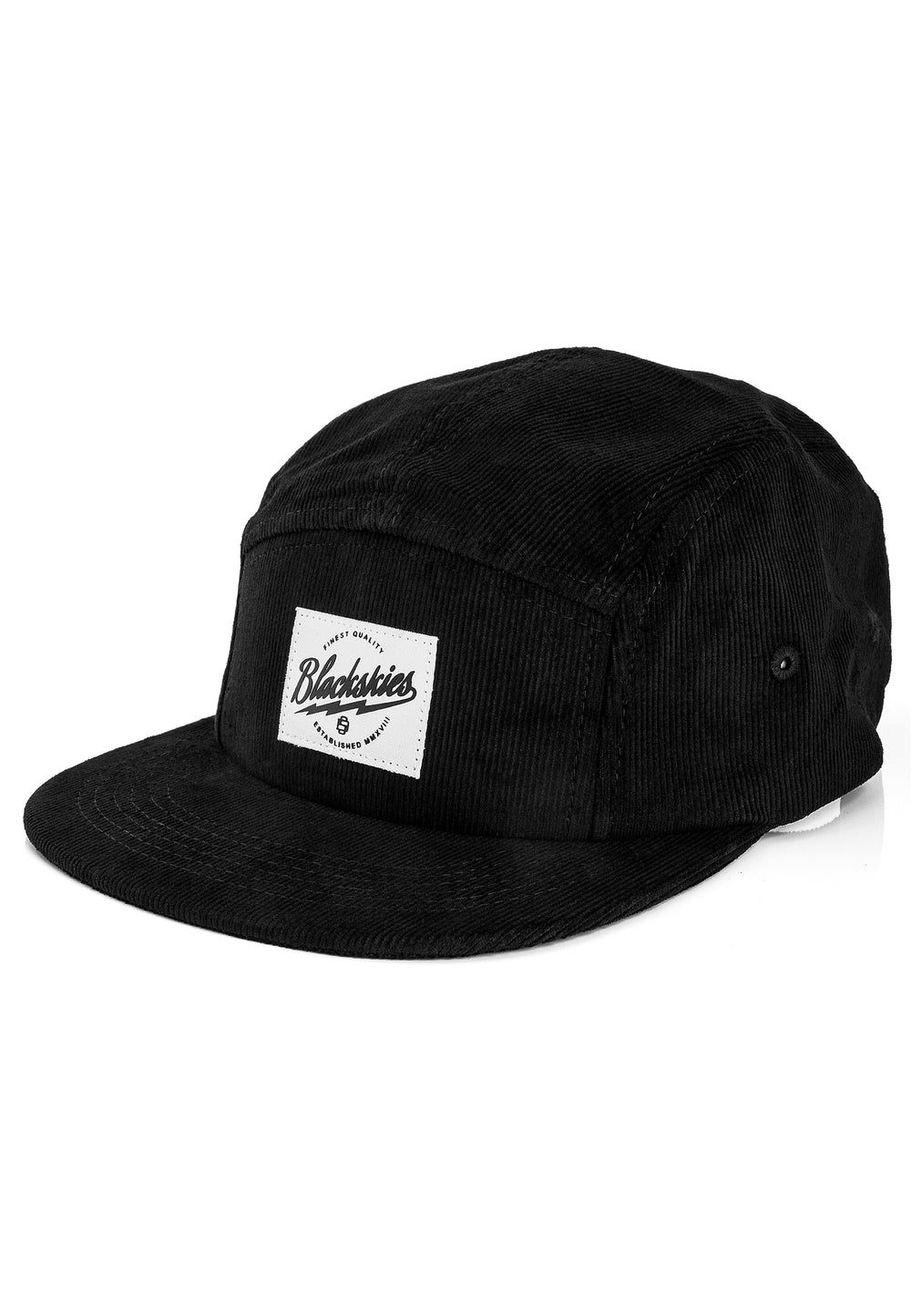
Camp cap example: Cord Ebony
5-panel camp cap · cotton corduroy
The Cord 5-Panel Cap Ebony is a five-panel camp cap. Its low camper silhouette is the defining shape; the black cotton corduroy adds ribbed texture. Think of these as two separate choices: the cut determines the outline, while the fabric changes its surface and character.
See the cap →Snapback: a closure that became a style label
Technically, snapback describes the adjustable plastic fastening at the back: two strips with studs and holes that snap together. It adjusts the circumference in steps. The word itself tells you nothing about the curvature of the visor.
In German and US retail, “snapback” is also used as a style category, often associated with a structured crown and flat visor. That familiar streetwear silhouette explains the association, but it is not a universal definition. Curved-visor snapbacks are common too, including the Miami and Positano examples above.
When a shop calls a cap a snapback, read the rest of the description: flat or curved visor, high or low crown, structured or soft front. Those details tell you which version you are looking at.
Savage Shield: a snapback in three views

Front: shape and visor
The olive crown and flat black visor show the familiar streetwear snapback look. The flat visor describes its shape; the fastening gives it the snapback name.

Underside: the construction
The patterned underbrim, sweatband and internal seams are visible here. This view separates the visor’s underside from the crown and its interior.

Back: the snap closure
The two overlapping plastic strips fasten with studs and holes. Choose a different set of holes to adjust the circumference in steps: this is the snapback closure.
Strapback, fitted and stretch-fit: other ways to fit
A strapback uses an adjustable strap, commonly secured with a buckle or clip. A fitted cap has a closed back and is sold in a specified size rather than adjusted with a rear fastening. A stretch-fit cap uses elastic components to accommodate a size range.
These are fit systems, not fixed looks. A curved baseball silhouette can use different closures, and a flat visor does not tell you whether the back is fitted or adjustable. Check your head measurement against the particular model’s size range.
Three details that change how a cap sits
Structure: a reinforced front holds its outline, even off the head. An unstructured crown is softer and follows the head more closely. Low-profile caps can still be structured: softness and height are separate characteristics.
Profile: a higher crown adds visual height; a lower crown gives a closer outline. These labels describe shape, not a universal head-circumference measurement. Two caps in the same size range can sit differently because their depth and panel cuts differ.
Visor: a flat brim gives a straighter horizontal line; a curved brim frames the face differently. Compare front and side views. Choose the silhouette you enjoy, then check comfort around your forehead and above your ears.
Bucket hats: a brim all the way around
A bucket hat has a downward-facing brim around the crown instead of a visor projecting only from the front. It changes the whole outline of an outfit. Brim width, crown depth and fabric all affect whether it looks compact or more relaxed.
For a Blackskies example, the Ivory Bucket Hat combines this all-round brim with corduroy texture. Its shape is the bucket-hat feature; corduroy is the material choice. Check the stated size, since a bucket hat may not offer rear adjustment.
Find your starting point
For a pronounced front and a strong patch focal point: start with A-frame styles. For a mesh back: look at truckers, then choose the crown and visor you prefer.
For a soft, familiar curved-visor look: compare dad caps. For a lower, flatter-topped outline: explore camp caps. For a structured flat-visor look: check that the snapback you choose actually has those features.
Once you have a shape in mind, compare fabrics and colours. Corduroy adds visible ribs, mesh gives an open texture and a smooth front lets the artwork take the lead. Finish with the size and fit guide.
Is every five-panel cap a camp cap?
No. Five panels can be arranged into different shapes. A camp cap has its own low camper cut; an A-frame has a pronounced pinched front. Ebony is our camp-cap example, while Miami and Positano illustrate A-frame truckers.
Can a cap be a trucker and a snapback?
Yes. Trucker describes the mesh back panels; snapback describes the adjustable plastic closure. Add an A-frame front and the same cap can correctly carry all three descriptions.
Does a high crown mean a larger size?
No. Crown profile and head circumference describe different dimensions. A high crown changes the outline and space above your head; the product’s size range tells you which circumference it is designed to fit.